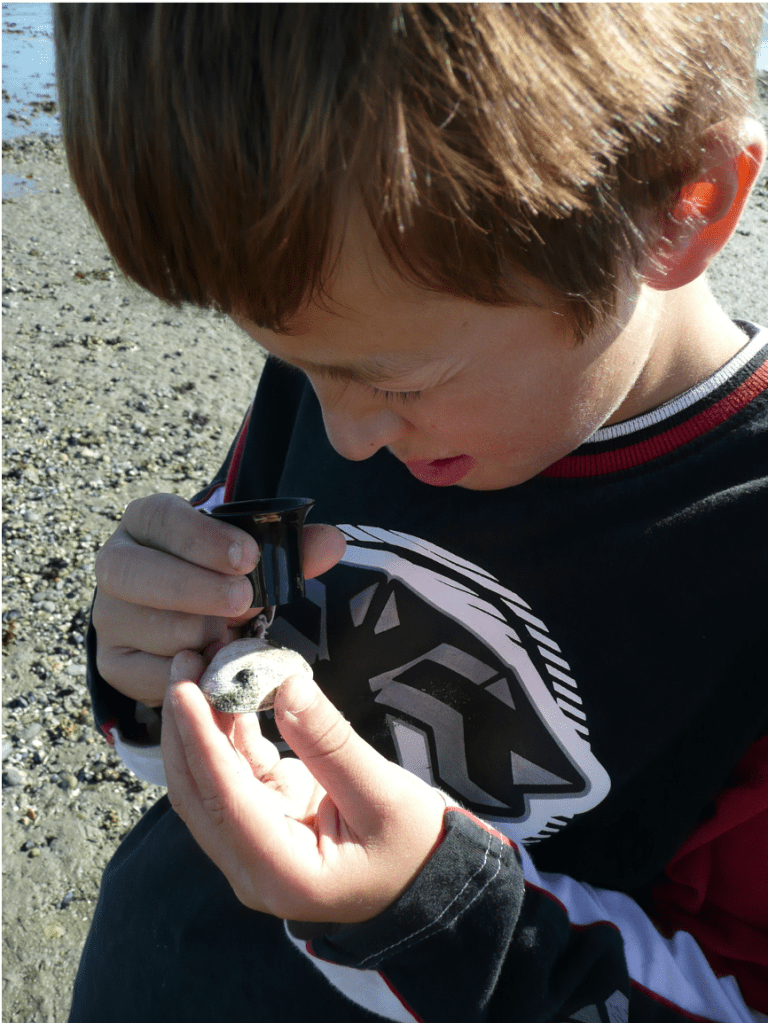
Spending time in nature is beneficial to children (and adults) in a number of ways. Time in nature can have a restorative effect, improving mood and reducing feelings of stress. It can also help to improve attention and concentration. In addition, research indicates that childhood experiences in nature with parents, families, and teachers can support the development of informed environmental citizenship. Experiencing and knowing nature is important and community mapping is one way to engage children (and educators) in learning with and in their local environments.
Community Mapping
Mapping is a way that we make sense of the world and our place within it. Maps share topographic representations of place, ideologies of place and space, and political, social, and cultural structures.
Community mapping is the process of working together with other community members to share the spaces, knowledge, stories, and values of local residents and/or place. The contributions of all mapmakers are considered, included, and valued in community maps, and this can allow for an important shift of power back into the hands of all citizens.
Community mapping can be an important pedagogical inclusion across the curriculum and especially in environmental education. This study explored how children’s participation in a community mapping project of a local park influenced their developing environmental worldviews.
Research Design
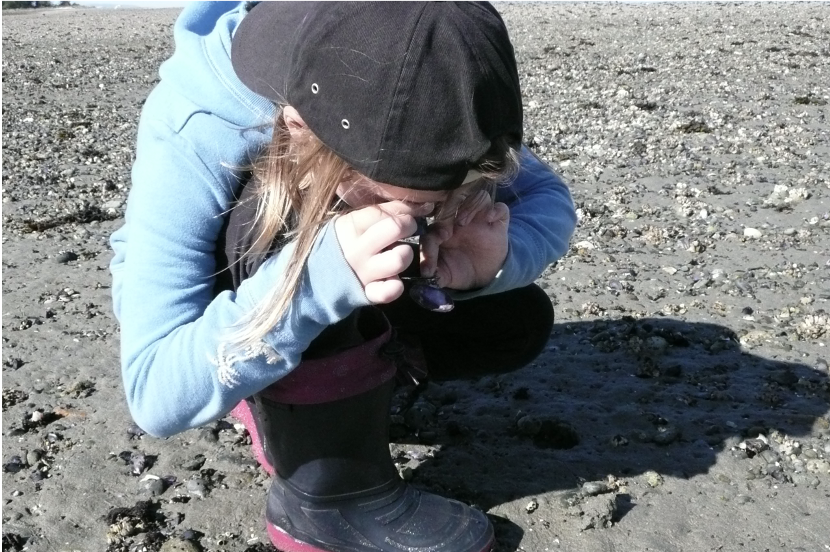
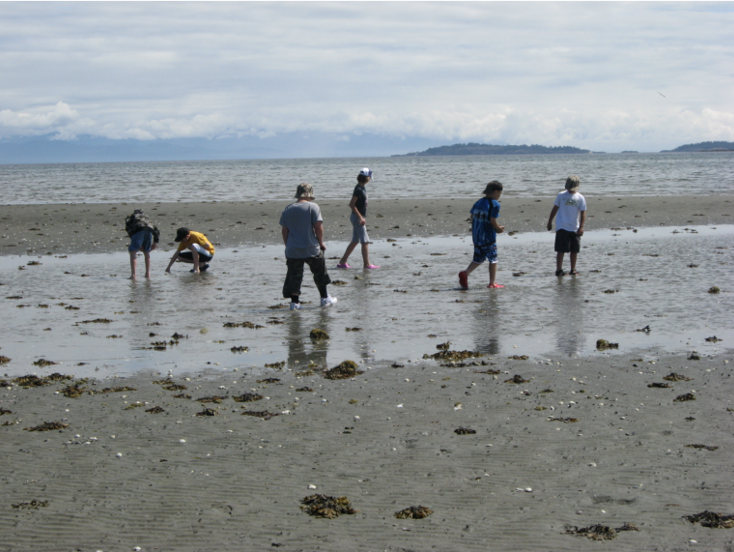
This study engaged a grade four class from Vancouver Island, Canada, in a community mapping project of “Sandy Beach,” a local provincial park. The project explored local, natural, and Indigenous histories of place, and children’s personal connections to and stories from the park. The class visited Sandy Beach three times over the four month project and also took part in visits to the local museum and cemetery and had a special in-class visit from the school district’s First Nations Support Worker. All 26 children took part in the weekly community mapping activities and 23 of those children participated in data collection.
The study followed a mixed methods research design. Children were asked to complete an adapted New Ecological Paradigm (NEP) Scale for Children (Manoli, Johnson, and Dunlap, 2007) before participating in the project, after the project, and three months after the end of the project (i.e., pre-test, post-test, and follow-up). A repeated measures ANOVA allowed for NEP scores for the class to be compared and changes in children’s environmental attitudes and beliefs to be identified. Qualitative data was collected through interviews with the children after the mapping project and three months after the project ended, samples of children’s mapwork, and observations and field notes. Thematic coding and analysis identified themes in the children’s developing place-based knowledge, attitudes and feelings, actions, and connections to place and experience.
Children’s Environmental Attitudes and Beliefs
Through its ten items, the NEP Scale for Children (2007) measures children’s environmental worldview through their recognition of the Rights of Nature (i.e., nature has value and rights), their beliefs in an Eco-Crisis (i.e., large environmental changes), and their acceptance of Human Exemptionalism (i.e., humans are separate from other species and natural limits do not apply to them).
| Pre-test | Post-test | Follow-up | |
| Rights of Nature | 4.35 (0.84) | 4.67 (0.84) | 4.68(0.84) |
| Eco-Crisis | 3.64 (1.18) | 3.85 (1.02) | 3.85 (1.05) |
| Human Exemptionalism | 3.20 (1.28) | 3.28 (1.09) | 3.13 (1.06) |
| Total | 3.72 (1.11) | 3.92 (1.03) | 3.88 (1.03) |
Significant changes were found in the children’s recognition of the Rights of Nature between their Pre-test and Follow-up scores (alpha = 0.044).
No significant differences were found within other factors (i.e., Eco-Crisis and Human Exemptionalism) and in Rights of Nature Pre-test-Post-test and Post-test-Follow-up.
Knowledge
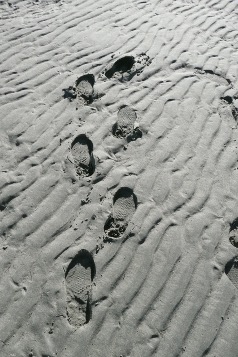
The grade fours recognized the biodiversity of the park and knew many animal and plant species living there. Children listed 34 kinds of animals living at Sandy Beach including squirrels, woodpeckers, ants, jellyfish, seagulls, tree frogs, eagles, and crickets. The children also identified plants, though not as many as animals; 18 different types of plants were noted. These included huckleberries, blackberries, Oregon Grape, seaweeds, and Douglas Fir trees. It is notable the many ways that the children identified animals and plants through their observations; for example, children recalled seeing the tracks and feathers of different animals, holes burrowed by animals in trees, and partially eaten leaves. They remembered hearing the songs and calls of different birds in the forest, meadow, and shoreline. They also contrasted the sweetness of huckleberries with the bitter taste of Oregon Grape.
The depth of children’s understandings of nature at Sandy Beach came through in the use of specific and advanced vocabulary. Many children noted seeing and hearing pileated woodpeckers at the park, seeing Western Red Cedars in the forest, and Charles, Xavier, and Ethan discussed how cougars are also called mountain lions and pumas. Along the beach, Lisa recalled tasting sea asparagus and Mark shared seeing a chiton, an interesting fossil-like animal.
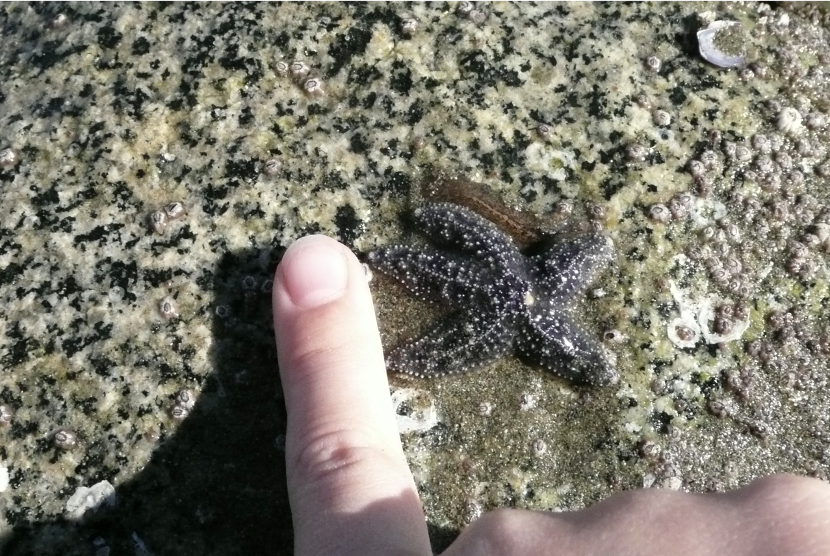
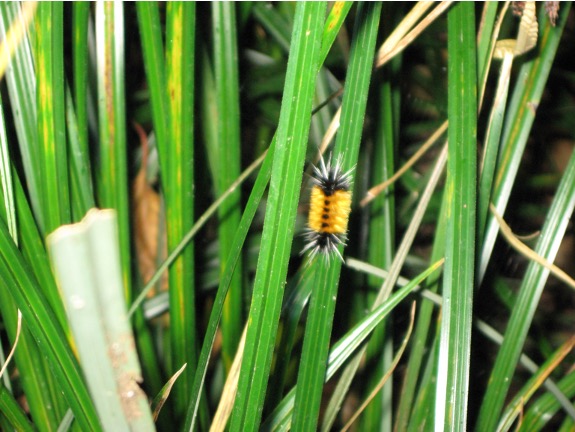
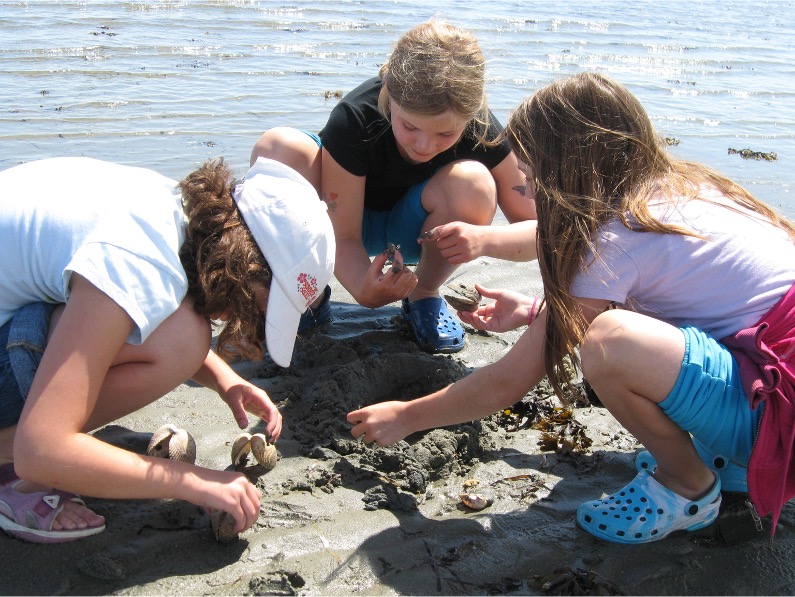
In addition to identifying animals and plants, the children spoke about adaptations and interactions of animals and plants at Sandy Beach and how these related to the meeting of basic needs for life. For example, spiders made homes in holes bored by woodpeckers and nurse logs provided habitats for many plants and animals to live within. Children spoke of ways that animals behaved to get food (e.g., gulls dropping shells onto rocks) and to avoid becoming food (e.g., clams burrowed in the sand shooting water at potential predators). They also noted ways that plants used animals to help in pollination (e.g., the “sticky ball bush”).
The children also noted changes in plants, animals, and activity at the park over time. These included seasonal changes in the plants and animals; for example, the presence and absence of berries and the high number of wasps in late summer compared to few, if any, in mid-autumn. They recognized that the position of logs on the beach changed with high tides and storms and that they saw more animals in fall compared to summer when, according to Charles, “people had just taken over.”
Attitudes and Feelings
The children’s discussions shared anthropocentric views of the world and placed human needs and wants over those of other living things. They spoke of preferring bushwhacking and creating new trails to walking on existing paths and the need to keep plants from growing over trails and taking over forests. When walking at the beach across herring eggs, Ian said “poor little guys” to which Norah responded, “there’s still millions and millions of them.” To some children, parks were made for people to walk and play and it was important for them to have distinct sections so people could find things like the bathrooms and not get lost. Least favourite parts of Sandy Beach included the prickles on blackberry bushes that got in the way of berry picking and eating and the “disgusting” swampy part of the beach, and a notable favourite place, for Zoe, was where she saw the squished snake because she hates snakes and loves to see them squished. However, not all children expressed these views. Some children recognized that Sandy Beach provided food, shelter, and play spaces for animals. Others shared that they did not want to disturb or frighten animals when they visited the park. Recalling a classmate tossing a crab into a tidal pool, Ian thought that this was a mean thing to do: “it’s kind of like kicking you out of your house.”
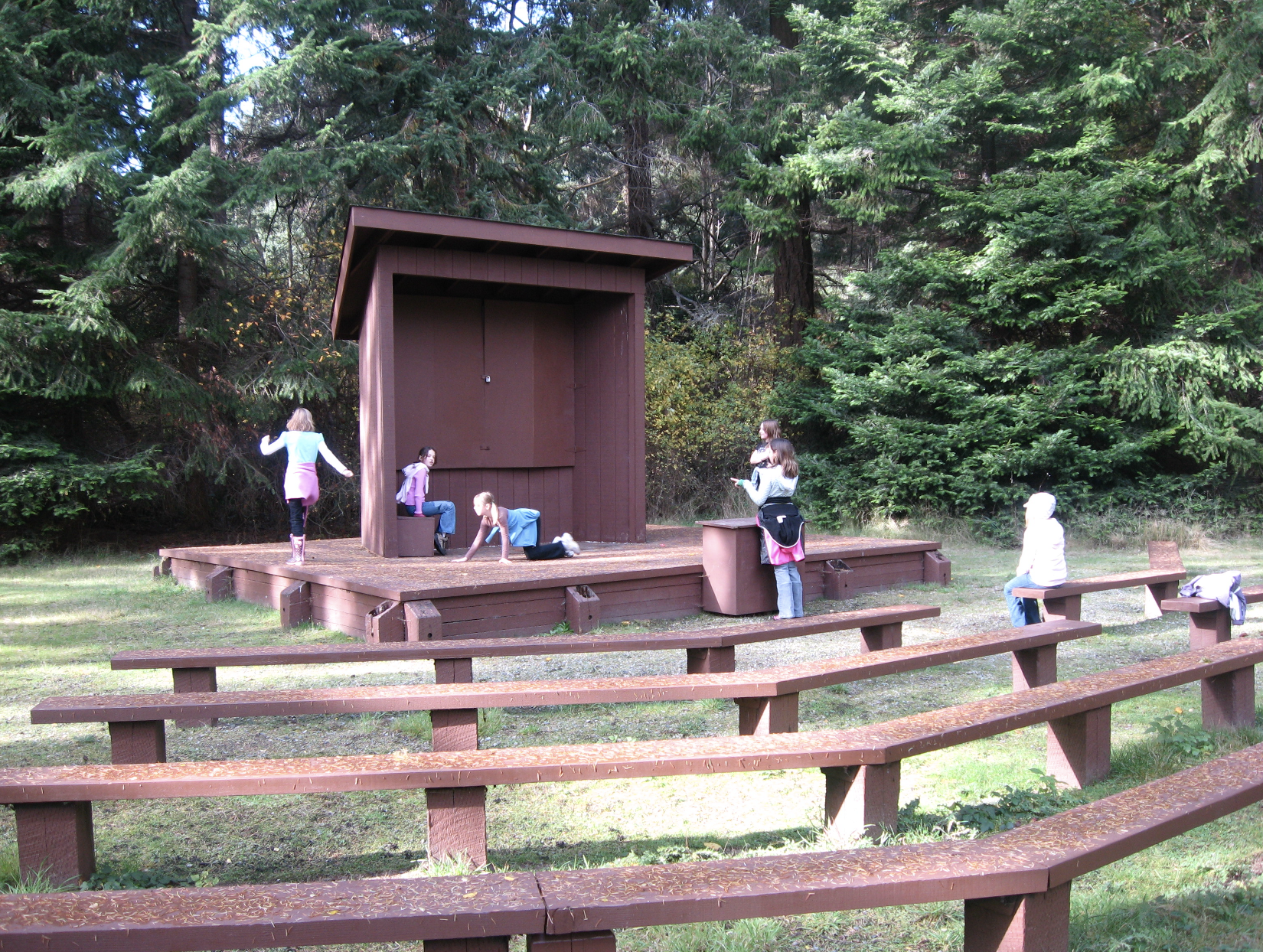
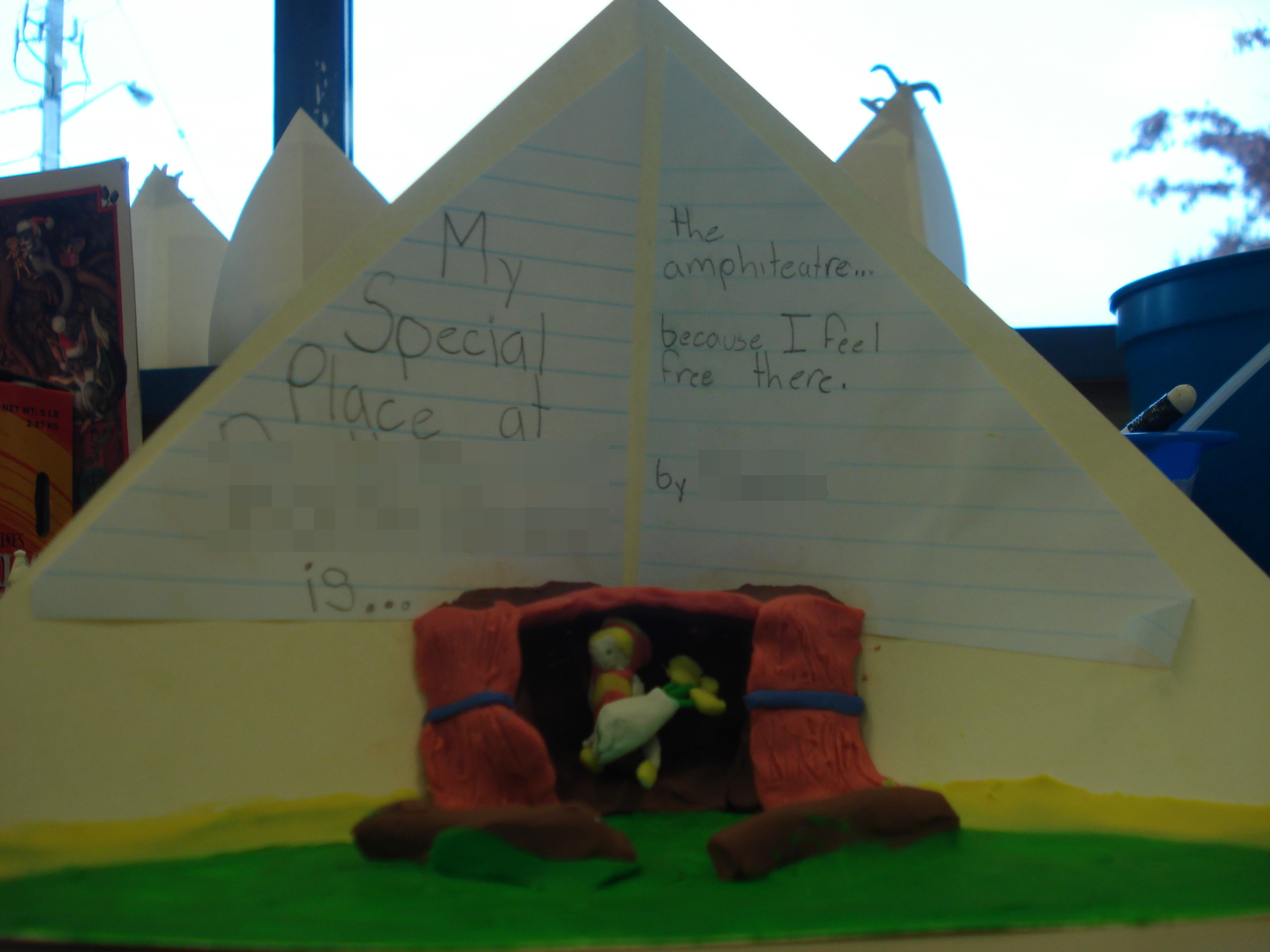
Three children were really drawn to the amphitheatre at Sandy Beach; it was a place where they felt that they could do anything, act out, and feel free. The amphitheatre featured in children’s discussions about the park and also in their special places dioramas.
Children’s comments about Sandy Beach and how it made them feel identified the park as a place of refuge. Many spoke of how the park was “really quiet,” “peaceful,” “more relaxing,” and “a bit more calm.” To some, the park was a place where they could get away from life’s stresses and worries and it was important for them to have parks like this. Children also shared that they felt safe at Sandy Beach, noting that it was safer than other parks and didn’t have the crime that happened in cities and towns. The limited number of roads in the park made it a safer place for plants and animals too. Some children shared that they felt protected by the trees and the forest, perhaps because of how much trees have helped us historically and in our contemporary daily lives. Several children said that they saw Sandy Beach as an environmental ideal; it was “a real place” and “more like what you think of land.”
To some children, Sandy Beach felt like home. Being at the park made Charles and Ethan have good thoughts and brought back pleasant memories. Charles noted that the park felt “more like home.”
For the children, Sandy Beach was a place to be happy and have fun. They identified that being in the park and actively experiencing it made people happy as they can “just walk around and feel happy and don’t feel stupid.” When speaking of Sandy Beach, Alice noted that a “place like that makes people happy and I’m one of those people.” Others highlighted going to the park to have fun: “you can just go there to have fun by yourself.”
Actions and Influence in the Park
In their discussions about how humans impact Sandy Beach, the children noted the pollution in the park. This included litter and its effects on living and nonliving members of the community and polluted air from cars; some even stated that they didn’t like the parts of Sandy Beach where cars were because “they are polluting the air.” Some children did note that the park was much less polluted than other areas in their community. The children also spoke about cigarettes being put out on the ground and discarded, campfire smoke harming animals, and noise pollution disturbing and upsetting animals.
With respect to space and development, the children recognized that Sandy Beach was busiest during the summer months. However, since Sandy Beach is bigger than most other parks, it doesn’t feel too crowded. The space afforded at the park made it a good place for camping and its smaller playground was likely intended, as according to Quinn, a larger playground would “take up too much room.” The children identified that Sandy Beach was less developed with fewer buildings and conveniences than other parks; it was “not as taken over” as other parks were. Oliver noted that if more of Sandy Beach was developed, trees would need to be cut down and this would in turn “cut down our air supply.”
The children understood that humans had a negative effect on the park, causing species and habitat disturbance and destruction. Examples provided included destroying animals’ homes by cutting down trees, stepping on small animals and plants while walking or bushwhacking, and touching animals and infecting them with “bad germs.” The children noted that many damaged plants will simply die and those that heal themselves will take a long time to do so.
Without specifically being asked, two students shared strong opinions about humans’ impact beyond Sandy Beach, in the broader environment, and in relation to global warning. Norah asserted that without humans, we would not be in the environmental crisis that we are. She and Ian predicted that global warning would lead to the demise of all humans or that the world would “just be a big garbage dump.” Ian detailed that he thought “the world would recover in a thousand years no matter what we did but we would die from global warning” and Norah thought that “the world would be better without humans.”
Ownership and Connection to Place and Experience
Most children spoke of shared stories and connections to past experiences at Sandy Beach with family and friends: walks, beach days, school field trips, camping holidays, hikes and huckleberry picking, and family gatherings. They recalled counting 48 jellyfish along a stretch of beach and told tales of the wasp “attack zone” in the big field. The children also related the mapping activities at school and the guest speaker visits to their understandings and experiences of, and in turn connections to, Sandy Beach.
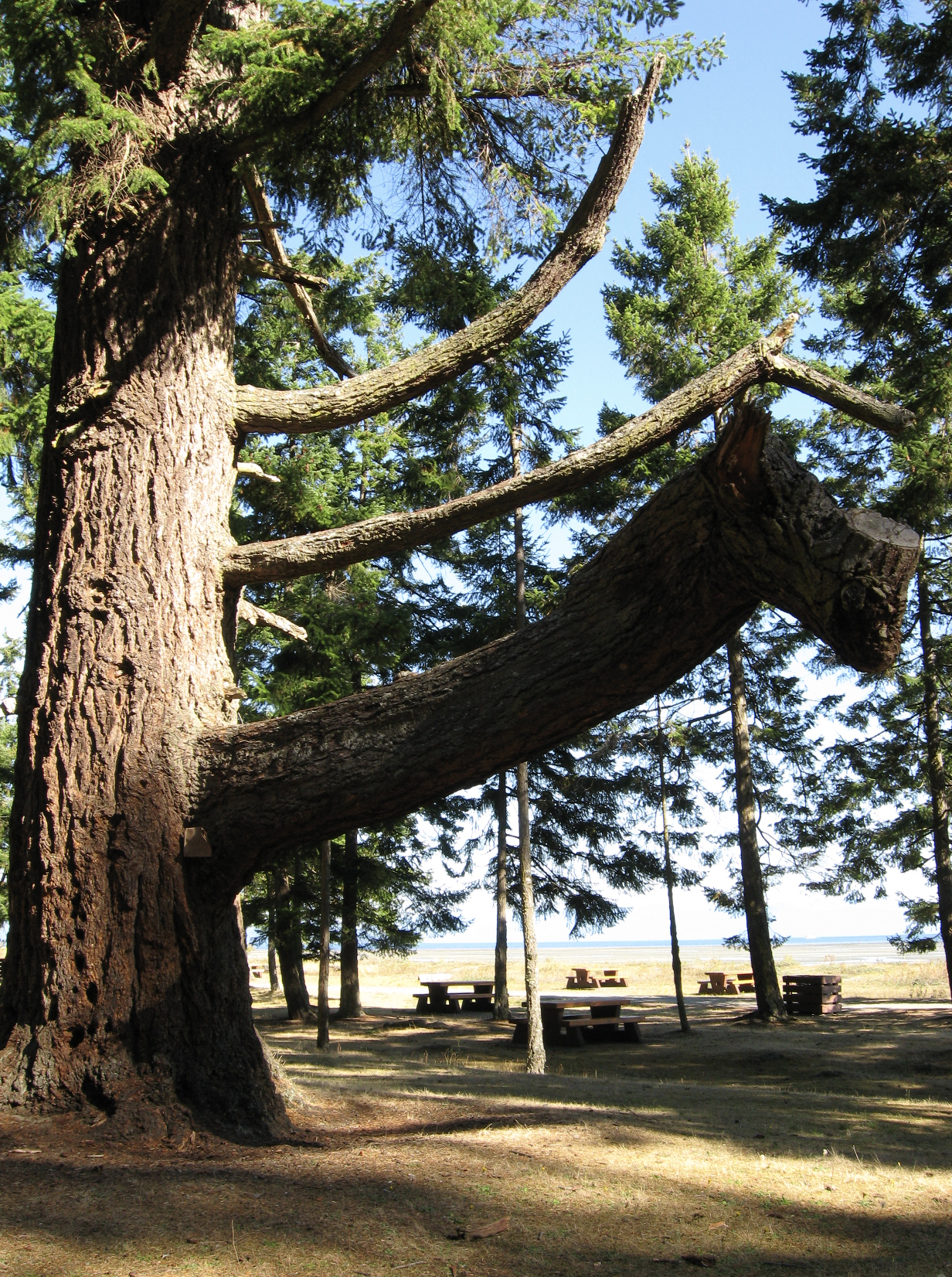
Some children shared their special created names for places and things at Sandy Beach. They spoke of the dragon tree or dinosaur tree, a unique tree that Norah went so far as to name Fluffy. Children also made up names for the plants and animals for which they did not know the specific names; for example, the sticky ball tree and the squishy ball tree (i.e., snowberry).
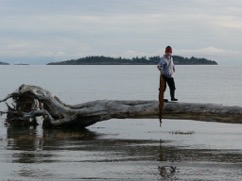
The children shared in their discussions and in their mapmaking activities what their special and favourite places were at Sandy Beach. Many children said that the forests and trails were their favourite and others liked the shoreline with the logs and the beach at low tide. Children liked playing in the log fort on the beach and sliding down the driftwood slide at the log pile. Mark enjoyed the view of the mountains and the water nearby the fort, and Gemma loved how the position of the logs was always changing on the beach with the tides. The children were also drawn to places at Sandy Beach where they discovered interesting animals, plants, and ecosystems. Few children identified developed or built locations as a special or favourite place; the only exceptions were the amphitheatre and interpretive centre.
Acknowledgement
This research has been partially funded by the Natural Science and Engineering Research Council, Canada’s Pacific CRYSTAL.
 Children's Ecologies